
Nicole Losavio
EditorUVRC Newsletter Team
Kristina Siladi
Article CollectionUVRC Newsletter Team
Articles
April 2026 Photo Letter From a Board Member
Greetings from Salt Lake City! I am out here on sabbatical for the winter. What brought me out here? The mountains and the people. A collaborator of mine is a professor at the University of Utah. In between meetings and research, I have been able to log lots of miles at 4,000 feet. Below are some highlights of my running adventures: beginning with one shot from the road.
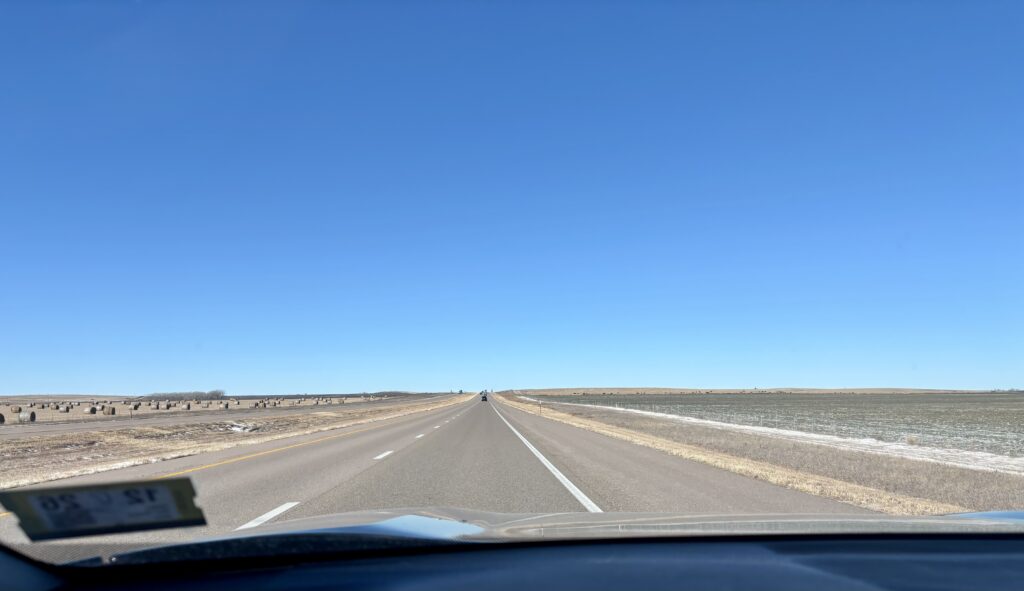
Can you name this state? I’m guessing the majority of you will. It was a beautiful contrast to the green mountains of the Upper Valley. The winds were howling and at one point, I thought my new Thule skybox might just fly off!
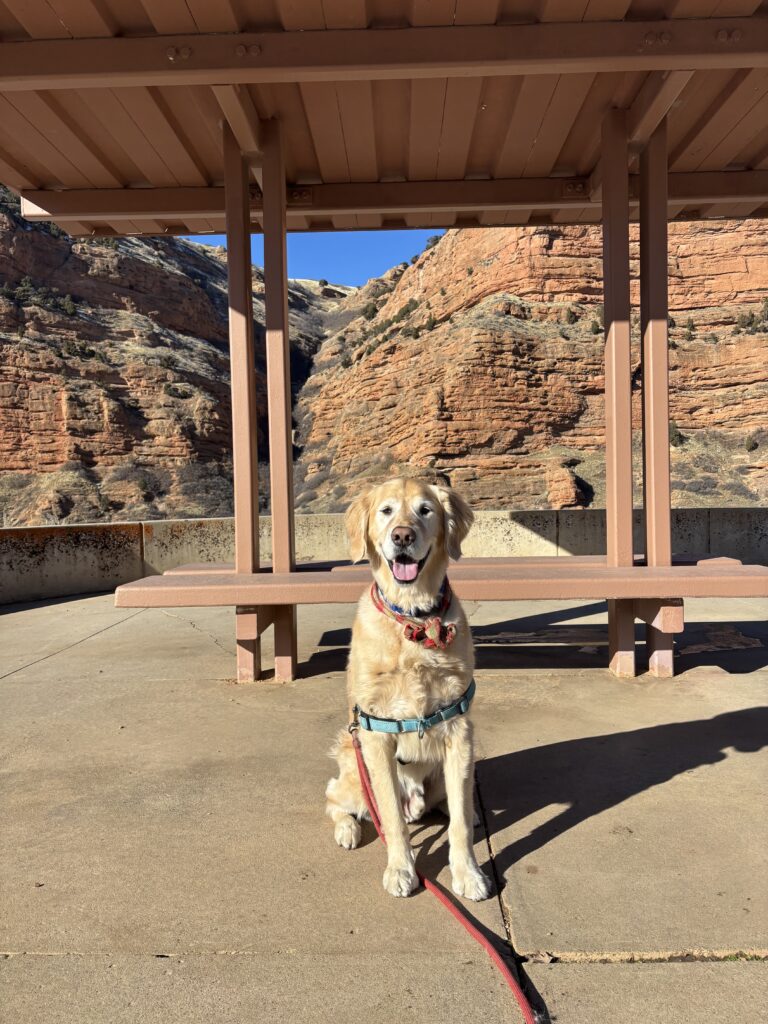
We made it! Thatcher could hardly contain his excitement. He pulled me towards the canyons with all his might. He managed to sit still long enough for me to catch this photo.
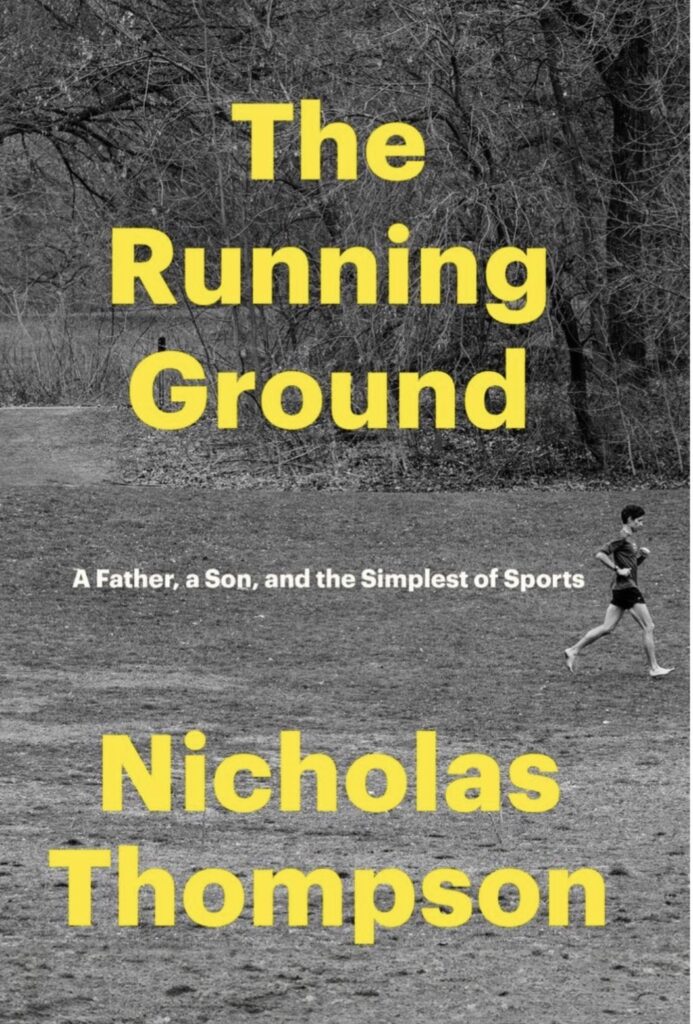
This author kept me company during my first week or so upon arrival. It is a non-fiction account of his complex relationship with his father and with himself (through running). He is from New England and he references several familiar places, including Mt. Kinsman and Dartmouth. Halfway through I thought, I bet someone in the club knows him.
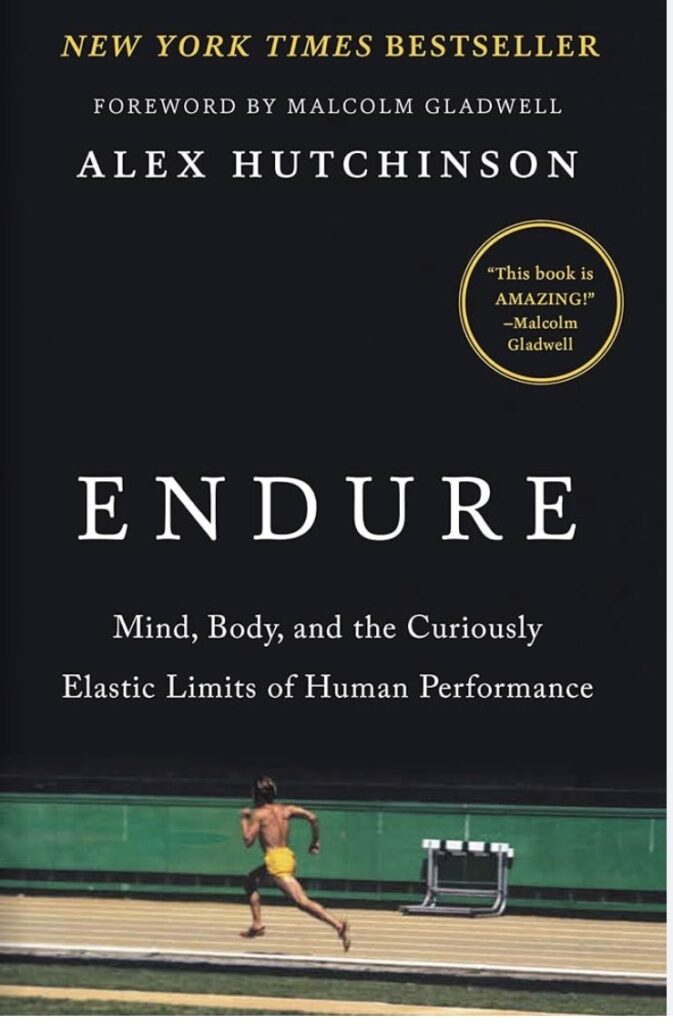
Next book, Endure. I remembered when this first came out in 2018. It looked intriguing but at the time, I was looking for something with more escapism to it. When someone mentioned it on a morning group run, I thought, let me give that another chance. It proved to be another great read by an ultra-runner pushing the limits of what is humanly possible. I’m sure I’m not the only UVRC runner who has read this one.
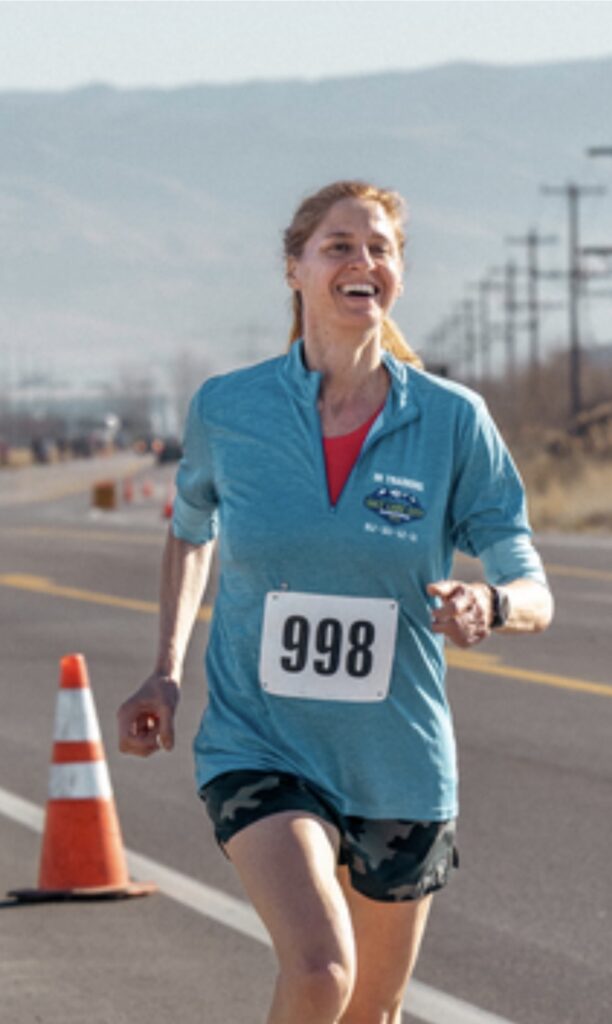
With a grin that big, I am clearly not pushing hard enough. This is from a 10k which was part of the Salt Lake City Winter Series. In its 48th year, it included a 5k, 10k, and 15k every other week beginning mid-January. I showed up to the 5k and won my age group!
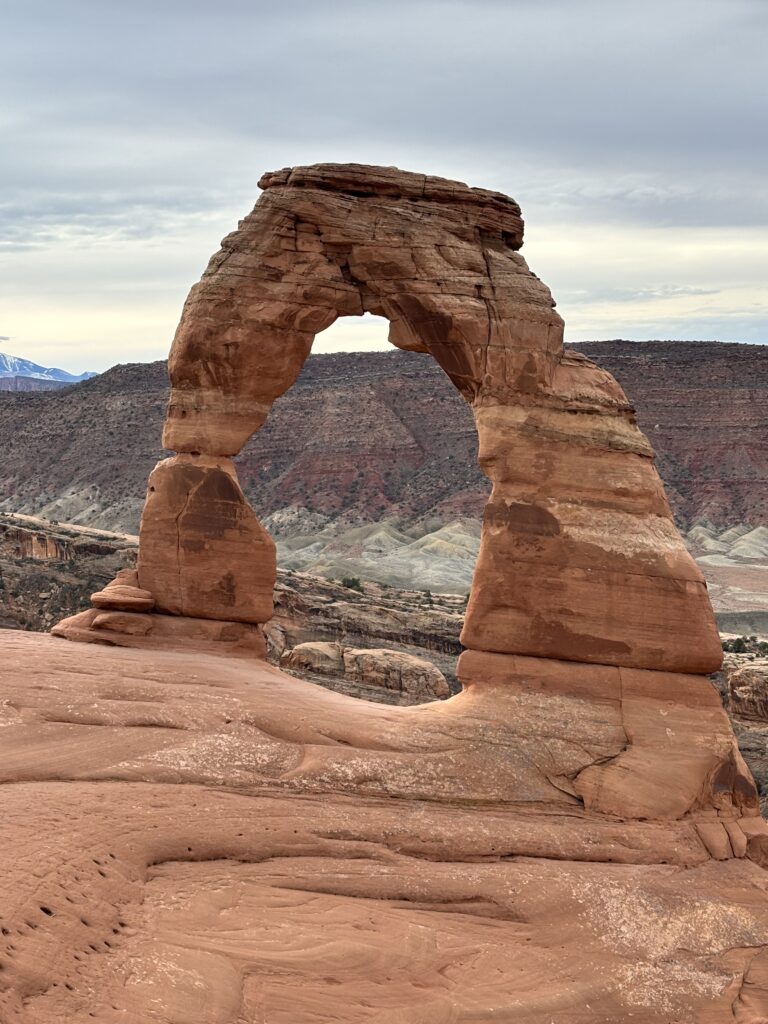
Moab was insanely beautiful. Driving through the entrance to Arches National Park felt like riding through the crust of the earth. (Maybe in a way, I was?) I did a short trail run to this spot early one morning.
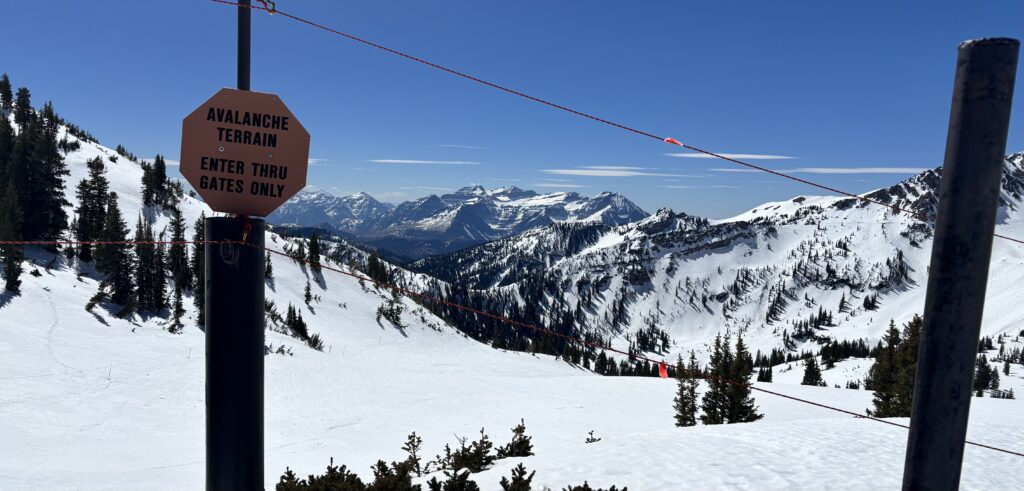
Despite the record low snowfalls, there is still plenty of snow in the canyons. I took the picture below on Wednesday, March 25. It is at the border of Alta and Snowbird. Beautiful spring skiing for those who like that kind of thing!
I wrote in a previous UVRS newsletter that one of the goals for my first marathon was to enjoy the process enough to want to do it again. So, never one who likes to leave a goal unmet, I am training now for my second marathon. It will be on April 25. Training at altitude is no easy task, but I’m all in now. Wish me luck! See you in May!
April 2026 Announcements
UVRC Calendar
Looking for a local race? Did you know UVRC’s website features a race calendar? Scroll through to find your next adventure!
Western New Hampshire Trail Series
Not a fan of pounding the pavement? Looking to try some new events this year? Check out the Western New Hampshire Trail Running Series! Races take place from May-September throughout the Upper Valley. All races are designed to be welcoming to newbies while still challenging for seasoned veterans.
Updated Discount Code: Running Warehouse
As a UVRC member, you can enjoy a discount from Running Warehouse: 20% off clothing and socks and 10% off select clearance shoes, visors & hats, and nutrition. Enter code 2PK52FZT at checkout. Note: this is a new code as of January 1st.
Volunteer Challenge 2026
Have you ever avoided getting lost in a race because someone in a stylish traffic vest pointed you in the right direction? Have you ever had someone hand you a cup of electrolyte mix mid-stride and continue to smile brightly even though some of that sticky liquid spilled on their hand as you took it from them? Have you ever had a stranger put a medal around your neck and congratulate you? Have you ever reached an aid station 20 hours into a race and had a stranger hand you pickle juice and an otter pop and tell you you look great even though you know they were lying through their teeth out of kindness?
If you answered yes to any or all of the above, you have benefited from the generosity of volunteers in the running community! Knowing that running events do not happen without volunteers, UVRC is once again issuing a Volunteer Challenge in 2026 – now with a new format! Any UVRC member who volunteers at least 3 hours at a running event or trail work day will be entered to win a pair of running shoes of their choice from Omer and Bob’s or Stateline Sports at the end of the year! Each person gets one entry, though volunteering more than 3 hours is always encouraged. You can submit your hours by emailing volunteering@uppervalleyrunningclub.org. If you;ve never volunteered at a running event before, we think you’ll find it to be a fun and rewarding experience!
Save the Date 6/27 – Volunteers Needed for Mount Washington Road Race
UVRC has provided volunteers for the Mount Washington Road Race for years, and we are hoping to round up another crew of amazing humans this year. The race is on Saturday, June 27th. We are in charge of post-race parking, as drivers bring runners back down to the starting area at the base. It’s a pretty easy gig, and in exchange, volunteers get all the feel-good vibes the volunteering brings about, and UVRC gets four bypass entries into the race for anyone who wants to run but does not get in via the lottery.
RELATED: Save the Date for the 2nd Annual UVRC Campout
UVRC will be hosting a campout at Barnes Field at the Dolly Copp Campground, just a few short miles from the start of the Mount Washington Road Race, June 26th-28th. It’s a great place for MWRR volunteers and racers to hang for the weekend, as well as anyone else who wants to spend a summer weekend in the Whites with some running friends! More details to come.
Covered Bridges Half Marathon lodging discount
Do you have friends or family coming into town for the Covered Bridges Half Marathon who need lodging? On the River Inn in Woodstock is offering a discount for racers and family/friends. Use the code EVENTS when booking, or reach out to Nikki at events@ontheriverwoodstock.com who can help you with your booking!
April 2026 UVRS Update
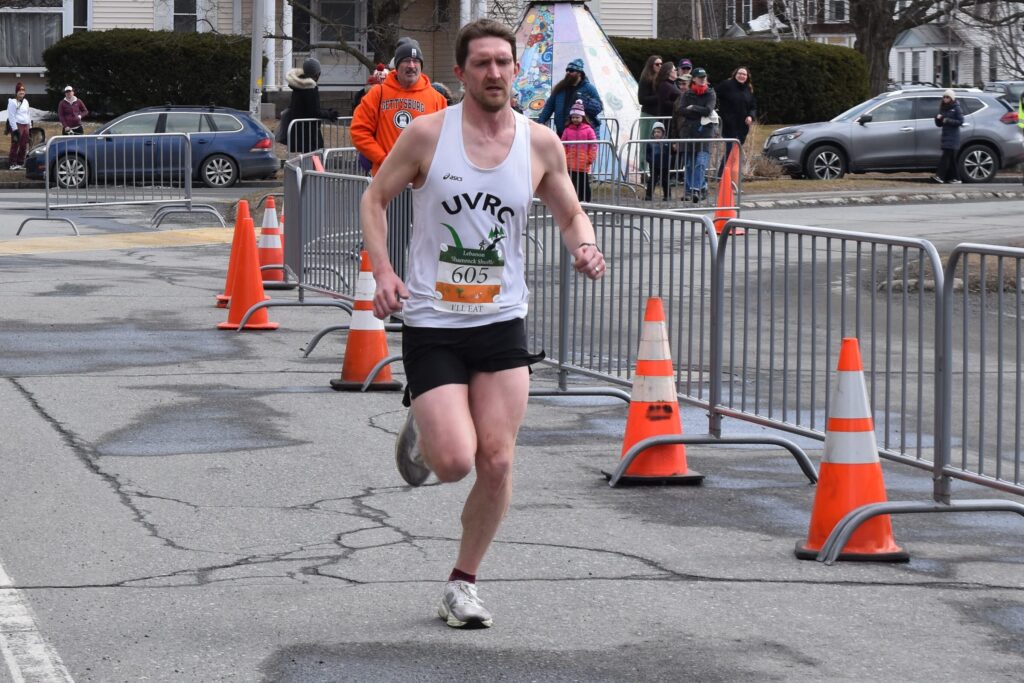
The 2026 Upper Valley Running Series (UVRS), brought to you by BE Fit Physical Therapy, is two races in. The second race in the series was the Shamrock Shuffle 5K in Lebanon NH. Congratulations to all of the UVRC participants; race results are here!
You can find UVRS standings on the UVRS website.
The next race in the series is the scenic Lake Morey Icebreaker 5M. The race is April 12th in Fairlee VT.
So, what is this UVRS that you’re hearing so much about? It’s our club’s series of local road races. Full information can be found online.
As an up-to-date UVRC member, you can participate in the series, just by signing up for each race through the normal race registration (even day-of is OK). You’ll get credit as a series participant.
For 2026, you need to run 6 (of the 11) races to get the finisher prize. I believe in you; you can do it!
If you don’t want to race, or have a family member along, who doesn’t want to run, consider volunteering. Prizes available. Learn about volunteering.
Why Two Runners Can Train the Same and Feel Completely Different
Metabolic Testing
Content from our newest sponsor, Grassroots Medicine
Why Two Runners Can Train the Same and Feel Completely Different
You’ve seen it before — maybe you’ve lived it.
Two people follow the same training plan. Same mileage, same effort, same commitment. One of them is improving, recovering well, and feeling strong. The other is tired, stuck, and wondering what they’re doing wrong.
Whether you’re chasing a PR or simply trying to enjoy Sunday’s long run without feeling wrecked on Monday, that gap can be genuinely frustrating. And it almost never comes down to willpower.
More often, the answer is metabolism — and metabolism is far more personal than most people realize.
Your metabolism is not a number on a scale
When most people hear the word metabolism, they think about how fast or slow the body burns calories. But metabolism is really the entire system your body uses to convert food and oxygen into energy — and to decide where that energy goes.
It governs how efficiently you fuel a long run. How quickly you recover after a hard effort. Whether your body burns fat, carbohydrates, or a mix of both at any given intensity. How your heart and lungs respond under load.
And here’s the thing: none of that works the same way from one person to the next.
Two runners at the same pace can be doing completely different things on the inside. One might be comfortably burning fat as a primary fuel source — an efficient, sustainable energy system that keeps them going mile after mile. The other might be pushed into carbohydrate-dominant metabolism much earlier, burning through glycogen faster, accumulating fatigue more quickly, and hitting that wall long before the finish line.
Neither runner is doing anything wrong. Their bodies are simply operating differently.
The zone that changes everything
Here’s something most runners have never been told: the intensity at which your body shifts from burning primarily fat to burning primarily carbohydrates is not the same for everyone. That crossover point — sometimes called your aerobic threshold — varies significantly from person to person, and it has enormous implications for how you train, how you fuel, and how you feel at mile 8, mile 13, or mile 20.
For a competitive runner, knowing exactly where that threshold sits can unlock smarter interval training, better race-day pacing, and more efficient fueling strategies. For someone running for fitness and enjoyment, it can mean finally understanding why you feel great on easy days and completely depleted after certain efforts — and how to fix it.
Training in the wrong zone for your metabolism isn’t just inefficient. It can leave you chronically fatigued, stalled in your progress, and more susceptible to injury — regardless of how many miles you’re logging.
Recovery is metabolic too
The same principle applies to how your body bounces back. Some runners feel fresh the day after a long effort. Others need two or three days before they feel human again. That’s not a fitness issue — it’s physiology.
How efficiently your body clears metabolic byproducts, rebuilds muscle tissue, and restores energy stores is deeply individual. And it’s something that can be measured, understood, and improved — once you know where you’re starting from.
Training plans are general. You are not.
Most training programs are built around averages. They work reasonably well for a broad range of people. But if you’ve ever felt like you were doing everything right and still not getting the results you expected — or if you recover more slowly than your training partners, feel like you’re always running on empty, or hit a wall that others don’t seem to hit — it’s worth asking whether the program is actually matched to how your body works.
Understanding your own metabolism doesn’t mean overhauling everything. Often it means making small, targeted adjustments — to pacing, fueling, intensity, or recovery — that are grounded in how your body actually responds, rather than how the average body is supposed to.
What if you could actually see it?
Here’s the question worth sitting with: do you actually know how your body is using energy when you run?
Not a rough estimate. Not a generic heart rate zone from a chart. But a precise, individualized picture of your fat-burning capacity, your carbohydrate dependence, your aerobic threshold, your VO₂ max, and how efficiently your metabolism is working right now.
That data exists. It’s measurable. And for competitive athletes and recreational runners alike, it tends to be one of the most eye-opening things they’ve ever learned about themselves.
That’s precisely what a PNOÉ metabolic assessment does. PNOÉ is a clinical-grade test that measures your exact training zones, fat-burning efficiency, VO₂ max, aerobic threshold, and biological age — giving you a precise, individualized picture of how your metabolism is actually working. It’s not a generic fitness test. It’s a detailed look at the engine behind your running, so you can stop guessing and start making adjustments that are grounded in your biology.
The runners who make the most consistent progress over time — at every level — aren’t always the ones who train the hardest. They’re often the ones who’ve learned to train in a way that works with their biology, not against it.
Dr. Seth Osgood is the founder of GrassRoots Functional Medicine in West Lebanon, NH, specializing in functional and longevity medicine. GrassRoots is pleased to provide UVRC members 25% off PNOÉ metabolic assessments at GrassRoots.

Runner Profile: William Ren
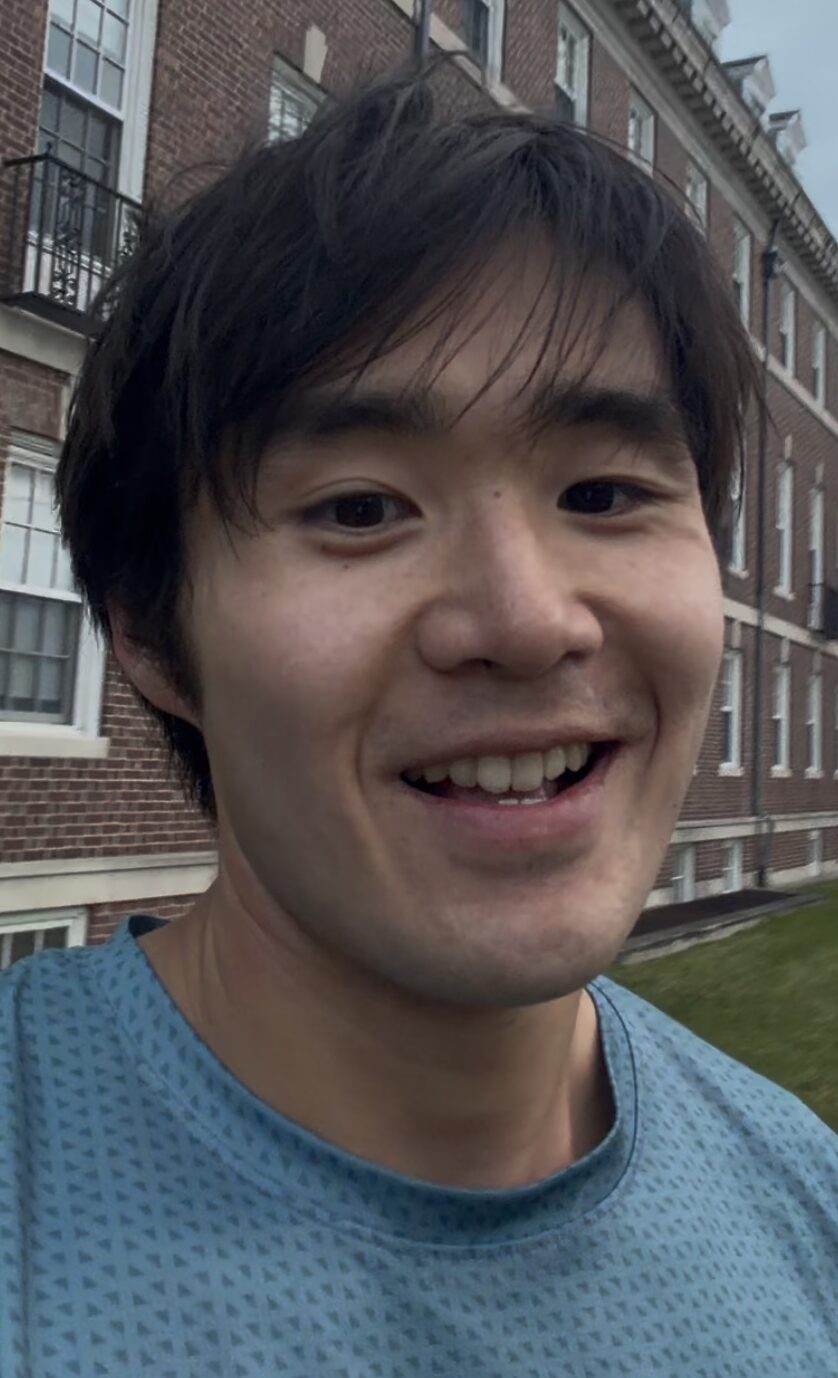
The Basics
- Years Running: 5ish, 2.5 of which since I’ve moved here to the UV
- Favorite Distance: half marathon
- Day Job: IT generalist — talk to me about tech!
- Favorite Emojis: 🫨, 👀, 🧑🌾
- Preferred Terrain: dirt road/easy singletrack
- Running Weather Preference: 47 degrees, sunny but in the shade, summer into fall. Alternatively, 2 hours into a heavy snowstorm with roads still unplowed.
- Favorite Shoes: Saucony Endorphin Pro is my certified do-it-all. I’ve run them on technical trail, in snow, in rain, in good health and bad, etc …
The “Run-Down”
- Why I started running: I started running at the end of college with the idea of losing weight/maintaining weight loss. It’s been an awesome ride. I credit UVRC for introducing me to speed work — TNT has been amazing for that!
- Favorite local route: Pine Park out and back, down the hill and along the Connecticut river. For a longer outing, up the Ballard trail in Norwich and down Bragg Rd.
- Current running goal: The overarching goal is always to enjoy running. That said, another concurrent goal is to break three hours in the marathon.
- Favorite running memory: Too many “favorites” to designate just one, and honestly too many to recall them all, but a notable one is my first run up to the Gile fire tower, and then down the blue ribbon trails in Norwich. I think this run last year was what made me really appreciate trail running, of which previously I had sort of shrugged off as “too hard” and “eh, I’d rather just run on the roads”.
Fast Favorites
- Go-to fuel: cheap-o gels I buy in bulk from the Feed, whatever’s on sale. I am very interested in making my own gels though, so if anyone has experience with that, please share!
- Favorite gear: Fun fact, I don’t think I have ever run without my Garmin (since buying it). Thinking about it now, that’s probably more than a thousand runs logged via this trusty device, which is crazy!
- Running Playlist/Podcast: I prefer to run without audio, but a podcast rec is “Perfect Person” with Miles Bonsignore — an advice show done right.
- Dream Race: Ultra-Trail du Mont-Blanc — I’m a sucker for scenery
- Post-Race Treat: it has to be a bit of time after the race, but unquestionably ice cream.
Carbload Routine: two nights before a long race I buy three family size bags of popcorners and munch away for the next two days
Running in Alaska: March
This month I’ll stick to my actual runs and relegate my skiing and other outings to my “Alaskan Journal” (https://www.trailnotes.org).
All of my recent runs have been linked to “Running Club North”. In fact their running calendar is pretty full, with one to three events per weekend. Then during the week there is the Wednesday Fahrenheit Be Darned (FBD) and the Thursday Hoodoo Brewery run. Which is more than I could handle. So I do just the Wednesday runs, backcountry ski twice a week, and skate ski once a week.
And I slipped in one quirky race.
>>March 4 FBD – Pooch Trail & Large Animals
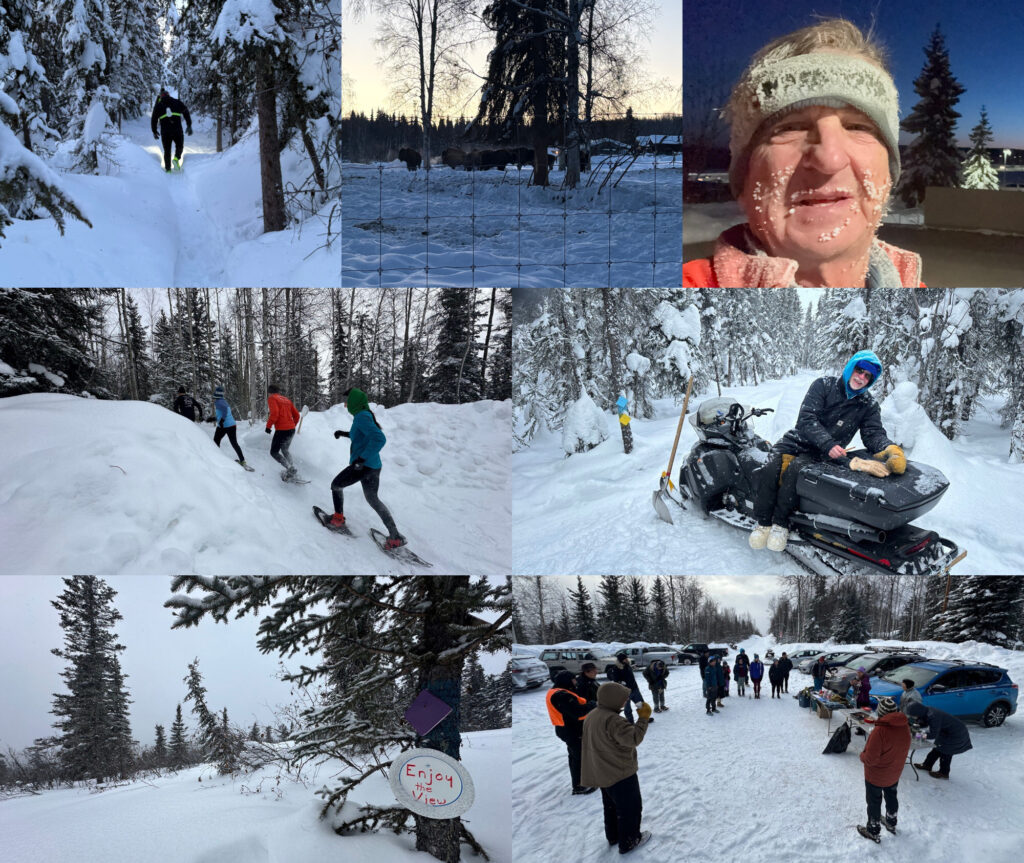
Wednesday runs are always fun, but sometimes memorably hard. Like the night we ran on the “Pooch Trail”. But even hard runs have some nice perks.
Since it is March, we are now running with a bit of daylight. Light and temperatures are changing very fast, but I have yet to see even a single hour above freezing.
This Wednesday we started by heading north, across the UAF campus and then into the “North Campus”, a square mile of forest laced with ski trails and foot paths. The ski trails are machine groomed, whereas the footpaths are mainly groomed by snowshoes.
If the snow had been a bit harder, and Ed claimed it had been on Monday, this would have been a gentle run. But today ever step went four to six inches down, and that makes for a lot of work, like running in loose sand or ankle deep mud. And harder than that was an occasional step which slipped off the tread-way and sunk into the snow next to the trail. These mis-steps are at least knee deep and sometimes more. Right now there is between three and four feet of snow on the ground.
So after an exhausting mile we came out on Dalton Road and after circling through a neighborhood are back on a trail. This trail is just outside the fence for the University’s “Large Animal Research Station”.
And there, on the other side of the fence, was a heard of Wood Bison. The Wood Bison is actually bigger than the Plains Bison found in the lower 48. But they (like the Musk-Ox and the Reindeer in the next field) seemed to be unfazed by the cold.
I, however, did note that my face was trimmed out with a rime frost.
>> March 7 – A Snowshoe Race
Every other weekend through the winter, Running Club North organizes a snowshoe race. I don’t think I would normally willingly participate in a snowshoe race. But I recognize that as the agent of my readers I need to participate in as wide a range of Alaskan activities as I can. So I pointed the car out Murphy Dome Road and headed to the races.
I have avoided snowshoe races because I thought they would be really hard; and it turns out I was not wrong.
The race starts at the end of Richard Berry Drive. Eric and Jane were there to park us and register us. I borrowed a pair of snow shoes, then stripped down five minutes before the start. We started 20 meters from the trail head such that there was space on the road after the start to jockey for position.
Jane called out “Go!” and Sam – of course — took the lead. Should I mention that there are only a dozen of us running today?
The trail is single track, not much wider than a set of snowshoes. I let myself get boxed in because I had no idea what pace I could run. But about five minutes in I decided there was too much conversation going on around me, so I called out “On your left” and passed a few people. Fortunately small running snowshoes are a bit narrow then the wider footgear most walkers ware, so you can kind of squeeze around other runners, if you have their cooperation.
This is hard work! Very hard work. In half a mile I am sweating despite it being sub-zero. The course is up to the ridge line and then back. Our footing is better than on the “Pooch trail” because of our footgear, but snow is still hard to run in.
A friend of the running club is at the halfway point and checking us all off as we turn and head for home. One last uphill and then . . .
I don’t think I really realized how steep the hill up was until we started down. I had wondered if I had put too much into the first half of the race, little realizing how now we could fly home!
Kelsi is a better flyer than I am and takes me in the last mile. She is young, limber and a great athlete, so I don’t mind being beaten by her.
When running downhill with snowshoes, snow flys all over and by the time we finished our backs are plastered with snow.
At the finish line there is much camaraderie, hot chocolate and brownies. Snowshoe racing is fun in its own special and weird way.
>> March 11 (FBD) – Farm & Campus Loop
From my point of view, what made this run unusual was that other runners deferred to me for directions.
Every week George and Ed send an email on Tuesday which explains the Wednesday run and includes a map of the loop. It also has a link to where you can sign in and sign out online.
I usually used the paper sign-in sheet, which is at our meeting point, the Patty Center (UAF Gym) . Once I didn’t sign out and received a phone call from Ed an hour after I got home to check on me. He said he didn’t want to send out the St. Bernards. I guess they feel responsible, especially on bitterly cold nights.
One reason for the maps is that they try to go the six months/twenty-six Wednesdays of the Fahrenheit Be Darned season without repeating a route. Because all these runs radiate from one point, that means sometimes a lot of twist and turns. And, since I like maps, I study them before the runs.
Tonight’s run, or since it is daylight now at 5:45 perhaps I should say, this afternoon’s run, starts with a loop around the fields of the university’s ag school. Having only been here in the winter, it is hard for me to imagine crops and pastures, but that is what the signs say.
Next we are running on Geist and University Ave, where road graders have scraped the sidewalks clean for the first time since a recent series of storms. This is so easy after the trail running. Then around campus and home.
>> March 18 (FBD) “Campus Cardio Stairway to Higher Knowledge”
As the name of the run indicated, this run is a lot of stairs on campus. With the added challenge of reporting the total step count to George at the end.
I ran with Austin and Sam. Sam normally is about a mile in front of me, but he is running the “White Mountain 100” in a week and so today is carrying his pack to test it out. He is also running light and easy as part of his taper.
The “White Mountains” in this case are in the middle of Alaska. The White Mountain Recreational Area (Bureau of Land Management – Alaska) is about 30% larger than the White Mountain National Forest in New Hampshire. The race can be done running, fat bike (snow) or skiing. There are five check points and the staff get there by snowmachines. But you must carry your own food and water, the trails are very remote.
But today we are just climbing staircases and counting steps.
Our group counted 355 steps. The “correct” answer is 357. But the bottom few steps going up to the cross-country ski warming hut were buried in snow and we wondered if they should count.
>> March 25 – last FBD Fahrenheit be Damned / Beat Beethoven / Final Exam & Pizza
Fahrenheit be Darned (or Fahrenheit be Damned) is a twenty-six week program, and so it eventually comes to an end. And this week is it. So the plan is a short run (5k), pizza and the final exam.
We are going to run the “Beat Beethoven” race course (if you are in Fairbanks April 18 – consider running it). The race is co-sponsored by the Fairbanks Symphony Orchestra and Running Club North. Beethoven’s 5th Symphony is 30+ minutes long, and I’m told they play a particularly long and slow version of that piece. Any one who finishes before Beethoven does, gets a free concert ticket.
I ran with Kelsie and she told me about the Tanana River Challenge, an ultra-marathon skijoring race. Skijoring is cross-country skiing while being towed by a pair of dogs. Perhaps “power assisted” by dogs would be a better description. She told me that there was much drama as she was passed by dogsled teams, and then re-passed them.
Today we beat Beethoven and ended at the student center where George and Ed had pizza waiting for us. And then the final exam. “When was the coldest run this year?” “How many miles did we run?” “How many cookies and cups of hot chocolate were consumed afterwards?” “According to the UVRC newsletter, how many Watts of heat do runners produce?”
A nice social hour, and George and Ed’s official last time as “trail bosses” after 18 years? (I may have got that question wrong on the exam.)
But the days are long and getting warmer. The thermometer has not gone above freezing here in Fairbanks since Halloween Night, but it looks like it will happen in the next week. So I’m leaving here in a few days.
Or as an Alaskan would say, “I’m going Outside.”